By Amiti Grozdon, M.Ed., LPC, LCPC, LCMHC. Licensed in Texas, Maine, Montana and New Hampshire. Last reviewed November 28, 2026.

Amiti Grozdon, LPC, offers online therapy for body-focused repetitive behaviors, using habit reversal training and a shame-free approach.
The short answer
Trichotillomania is a body-focused repetitive behavior (BFRB) where a person repeatedly pulls out their own hair, most often from the scalp, eyebrows or eyelashes, and has trouble stopping despite wanting to. It affects an estimated 1 to 2 percent of adults, often starting around the teen years. It isn't a bad habit or a lack of willpower. Behavioral therapies such as habit reversal training and the Comprehensive Behavioral (ComB) model help many people pull less and feel more in control.
What trichotillomania looks like
- Pulling hair from the scalp, eyebrows, eyelashes or other areas.
- Noticeable thinning or bald patches, which some people cover with hats, makeup or hairstyles.
- Repeated attempts to stop or cut back.
- Feeling distressed, embarrassed or limited by it.
- Rituals around pulling, like searching for a certain texture of hair, running it across the lips or examining the root.
Focused and automatic pulling
Many people notice two styles of pulling, and most experience both:
- Automatic pulling happens without much awareness, often while reading, scrolling, driving or watching TV.
- Focused pulling is more deliberate, often in response to an urge, a feeling or a hair that feels "wrong."
Knowing which style is more common for you helps decide which strategies to try first.
Why people pull
There's no single cause. Pulling often helps regulate something in the moment:
- Stress and anxiety: pulling can bring brief relief.
- Boredom and understimulation: it gives the hands and senses something to do.
- Sensory seeking: the feel of the hair or the pull itself can be satisfying.
- Tension and urges that build until pulling releases them.
- Neurodivergence: BFRBs appear to be common among people with ADHD and autistic people. Read more about trichotillomania in autistic adults.
Genetics and temperament likely play a role too. Shame tends to make pulling worse, not better.
Is trichotillomania a form of OCD?
The DSM-5-TR lists trichotillomania in the chapter on obsessive-compulsive and related disorders, alongside skin picking. That's a classification, not a sign that it's the same as OCD. Trichotillomania usually isn't driven by obsessions, and it's typically treated with different methods, especially habit reversal training and the ComB model. If you're also dealing with obsessive thoughts and compulsions, look for a specialist in OCD as well. The International OCD Foundation can help you find one.
How therapy helps
Habit reversal training (HRT)
HRT builds awareness of when and how pulling happens, then pairs it with a competing response, an action that makes pulling harder, like making a fist or holding an object. Learn more about habit reversal training.
The Comprehensive Behavioral model (ComB)
ComB looks at the sensory, cognitive, emotional, motor and environmental factors that keep pulling going, then builds a personalized set of strategies for each one.
Acceptance and commitment therapy (ACT)
ACT helps you make room for urges without acting on them, and focus on what matters to you rather than on fighting every urge. Our article on how BFRB therapy works explains these approaches in more detail.
Choose weekly online sessions, or a Saturday BFRB intensive when you want focused time to build a plan. See current fees.
Self-help strategies to try
- Track pulling for a week: when, where, what you were feeling and which hand.
- Add friction: gloves, bandages on fingertips, hats or a hair tie on the wrist during high-risk times.
- Keep your hands busy with fidgets, textured objects or something to hold. See BFRB tools and fidgets.
- Change high-risk settings: dimmer bathroom lighting, no magnifying mirrors, a timer for screen time.
- Meet the need underneath: movement for restlessness, sensory input for boredom, calming strategies for stress.
- Practice self-compassion. Shame after pulling can fuel the next episode. Read about BFRBs and shame.
When to get help
Consider therapy if pulling causes noticeable hair loss, takes up a lot of time, affects your confidence or relationships, or if you've tried to stop on your own without lasting change. If you notice skin damage or infections, see a doctor or dermatologist too.
Sagebrush Counseling offers online BFRB therapy for adults in Texas, Maine, Montana and New Hampshire, plus a BFRB intensive: a focused three-hour session. Read what to expect in a BFRB intensive. See current fees.
Frequently asked questions
What is trichotillomania?
It's a body-focused repetitive behavior where a person repeatedly pulls out their own hair and has trouble stopping, despite wanting to.
What causes trichotillomania?
There's no single cause. Stress, boredom, sensory seeking, emotional regulation, genetics and neurodivergence can all play a role.
Is trichotillomania OCD?
No, though the DSM-5-TR lists it among obsessive-compulsive and related disorders. It usually isn't driven by obsessions and is treated with behavioral approaches like habit reversal training.
Can trichotillomania be cured?
Many people reduce pulling significantly with therapy and self-help strategies. It can come and go over time, so most people think of it as something they learn to manage.
Does hair grow back after trichotillomania?
In many cases, yes, once pulling decreases. Long-term, repeated pulling from the same area can sometimes affect regrowth, so a dermatologist can help if you're concerned.
Sources
- Grant, J. E., and Chamberlain, S. R. (2016). Trichotillomania. American Journal of Psychiatry, 173(9), 868 to 874.
- American Psychiatric Association. (2022). Diagnostic and Statistical Manual of Mental Disorders (5th ed., text rev.).
- Mansueto, C. S., Stemberger, R. M. T., Thomas, A. M., and Golomb, R. G. (1997). Trichotillomania: A comprehensive behavioral model. Clinical Psychology Review, 17(5), 567 to 577.
- The TLC Foundation for Body-Focused Repetitive Behaviors. bfrb.org.
Printable tools from the shop
Instant downloads you can print at home.

Draw a Card, Write a Page: 100 Journal Prompt Cards
100 prompts to help you slow down and notice what you feel, five minutes at a time.
Get the download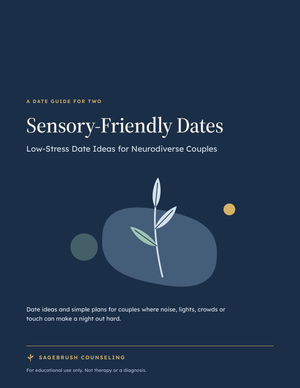
Sensory-Friendly Dates
Date ideas and simple plans for couples where noise, lights or crowds get in the way.
Get the download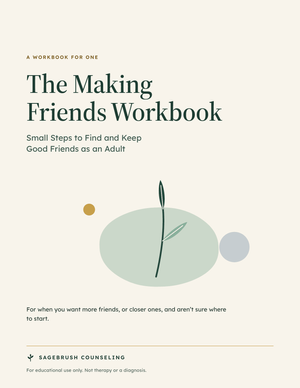
The Making Friends Workbook
For when you want more friends, or closer ones, and aren't sure where to start.
Get the downloadYou are not alone in this
Individual sessions are online in Texas, Maine, Montana and New Hampshire. Start with a free 15-minute consultation. See current fees.
Book a free consultationEducational information, not advice. This article is for general education. Nothing here is medical or mental health advice, a diagnosis, or a recommendation about what's right for you, and reading it doesn't create a therapist and client relationship. If you're in crisis or thinking about suicide, call or text 988, the Suicide and Crisis Lifeline. If you're in danger, call 911.