By Amiti Grozdon, M.Ed., LPC, LCPC, LCMHC. Licensed in Texas, Maine, Montana and New Hampshire. Last reviewed November 28, 2026.

Amiti Grozdon, LPC, offers online therapy for body-focused repetitive behaviors, using habit reversal training and a shame-free approach.
Wondering whether your hair pulling, skin picking or nail biting is a body-focused repetitive behavior? This 14-question self-check takes about two minutes. It is a reflection tool, not a diagnosis.
BFRB self-check: hair pulling, skin picking and nail biting
Read each statement and choose how often it fits you over the past month. There are no right answers.
1. I pull, pick, bite or chew at my hair, skin, nails, cheeks or lips more than I'd like.
2. I notice I've been doing it only after I've already started.
3. I do it more when I'm stressed, anxious or upset.
4. I do it more when I'm bored, waiting or understimulated.
5. I do it during screen time, reading, driving or watching TV.
6. Certain bumps, textures or hairs feel like they need to be removed or smoothed.
7. I've tried to stop or cut back and found it hard.
8. It has left marks, bald patches, sore spots or scars.
9. I spend more time on it than I'd like.
10. I hide the effects with clothing, makeup, hats or bandages.
11. I avoid activities, like swimming, haircuts or close contact, because of it.
12. I feel ashamed or frustrated after an episode.
13. It's hard to keep my hands still without something to hold.
14. It affects my mood, confidence or relationships.
0 of 14 answered
This quiz is a reflection tool, not a diagnosis. Only a qualified professional can assess you. If you are in crisis, call or text 988.
What this quiz measures
This quiz looks at body-focused repetitive behaviors (BFRBs): repeated pulling, picking or biting at your own hair, skin, nails, cheeks or lips that is hard to stop. It covers hair pulling (trichotillomania), skin picking (dermatillomania or excoriation), nail biting, cuticle picking, and cheek or lip biting. Your score shows how much these behaviors seem to affect you right now. It's a reflection tool, not a diagnosis.
Common types of BFRBs
- Hair pulling (trichotillomania): pulling hair from the scalp, eyebrows, eyelashes or elsewhere. Read trichotillomania: what it is and how therapy helps.
- Skin picking (dermatillomania or excoriation): picking at bumps, scabs, cuticles or smooth skin. Read why you keep picking your skin.
- Nail biting and cuticle picking: biting nails or the skin around them, sometimes until it bleeds.
- Cheek and lip biting: chewing the inside of the cheeks or the lips.
- Others: hair chewing, nose picking or scab eating can also be BFRBs.
For an overview, see what are BFRBs?
What your score means
- Lower scores suggest these behaviors don't take up much of your life right now.
- Middle scores often point to a pattern that shows up in certain situations, like stress, boredom or screen time.
- Higher scores suggest the behavior is costing you time, comfort or confidence, and that support could help.
Whatever your score, BFRBs are common, and they aren't a sign of weak willpower. Many people have them for years before learning they have a name and effective treatment.
Why BFRBs happen
BFRBs usually serve a purpose in the moment. They can soothe stress, relieve boredom, satisfy a sensory need or release an urge that builds up. They seem to be especially common among people with ADHD and autistic people. Shame afterward tends to feed the cycle, which is why self-compassion is part of treatment.
What helps
- Habit reversal training (HRT): builds awareness and a competing response. See habit reversal training.
- The Comprehensive Behavioral model (ComB): addresses sensory, emotional, cognitive, motor and environmental triggers one by one.
- Acceptance and commitment therapy (ACT): helps you ride out urges without acting on them.
- Practical changes: fidgets, barriers like bandages or gloves, and changes to high-risk spaces. See BFRB tools and fidgets.
Our article on how BFRB therapy works explains these in more depth.
Getting support
Sagebrush Counseling offers online BFRB therapy for adults in Texas, Maine, Montana and New Hampshire, and a BFRB intensive, a focused three-hour session. See what to expect in a BFRB intensive. See current fees.
Choose weekly online sessions, or a Saturday BFRB intensive when you want focused time to build a plan. See current fees.
Frequently asked questions
Is this a trichotillomania test or a dermatillomania test?
It covers both, plus nail biting and cheek or lip biting. It can help you reflect, but it can't diagnose trichotillomania, skin picking disorder or any other condition.
How do I know if I have a BFRB?
Signs include repeated pulling, picking or biting that's hard to stop, leaves marks or damage, and causes distress. A therapist who specializes in BFRBs can help you understand your pattern.
Is nail biting a BFRB?
Yes, when it's frequent, hard to stop and causes damage or distress. Occasional nail biting is common and isn't necessarily a BFRB.
Are BFRBs linked to ADHD or autism?
They appear to be more common among people with ADHD and autistic people, possibly because of sensory needs and self-regulation.
Can BFRBs be treated?
Yes. Behavioral therapies like habit reversal training and the ComB model help many people reduce pulling, picking or biting.
Sources
- The TLC Foundation for Body-Focused Repetitive Behaviors. bfrb.org.
- Grant, J. E., and Chamberlain, S. R. (2016). Trichotillomania. American Journal of Psychiatry, 173(9), 868 to 874.
- Grant, J. E., Odlaug, B. L., Chamberlain, S. R., Keuthen, N. J., Lochner, C., and Stein, D. J. (2012). Skin picking disorder. American Journal of Psychiatry, 169(11), 1143 to 1149.
Printable tools from the shop
Instant downloads you can print at home.

Draw a Card, Write a Page: 100 Journal Prompt Cards
100 prompts to help you slow down and notice what you feel, five minutes at a time.
Get the download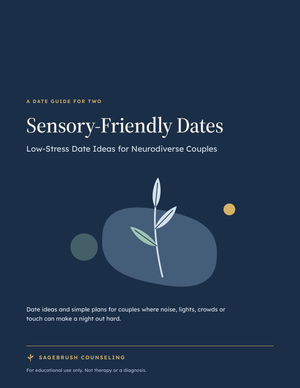
Sensory-Friendly Dates
Date ideas and simple plans for couples where noise, lights or crowds get in the way.
Get the download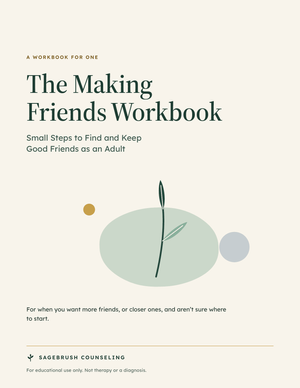
The Making Friends Workbook
For when you want more friends, or closer ones, and aren't sure where to start.
Get the downloadYou are not alone in this
Individual sessions are online in Texas, Maine, Montana and New Hampshire. Start with a free 15-minute consultation. See current fees.
Book a free consultationEducational information, not advice. This quiz and article are for general education. The quiz is a reflection tool and isn't a diagnosis. Nothing here is medical or mental health advice, a diagnosis, or a recommendation about what's right for you, and reading it doesn't create a therapist and client relationship. If you're in crisis or thinking about suicide, call or text 988, the Suicide and Crisis Lifeline. If you're in danger, call 911.