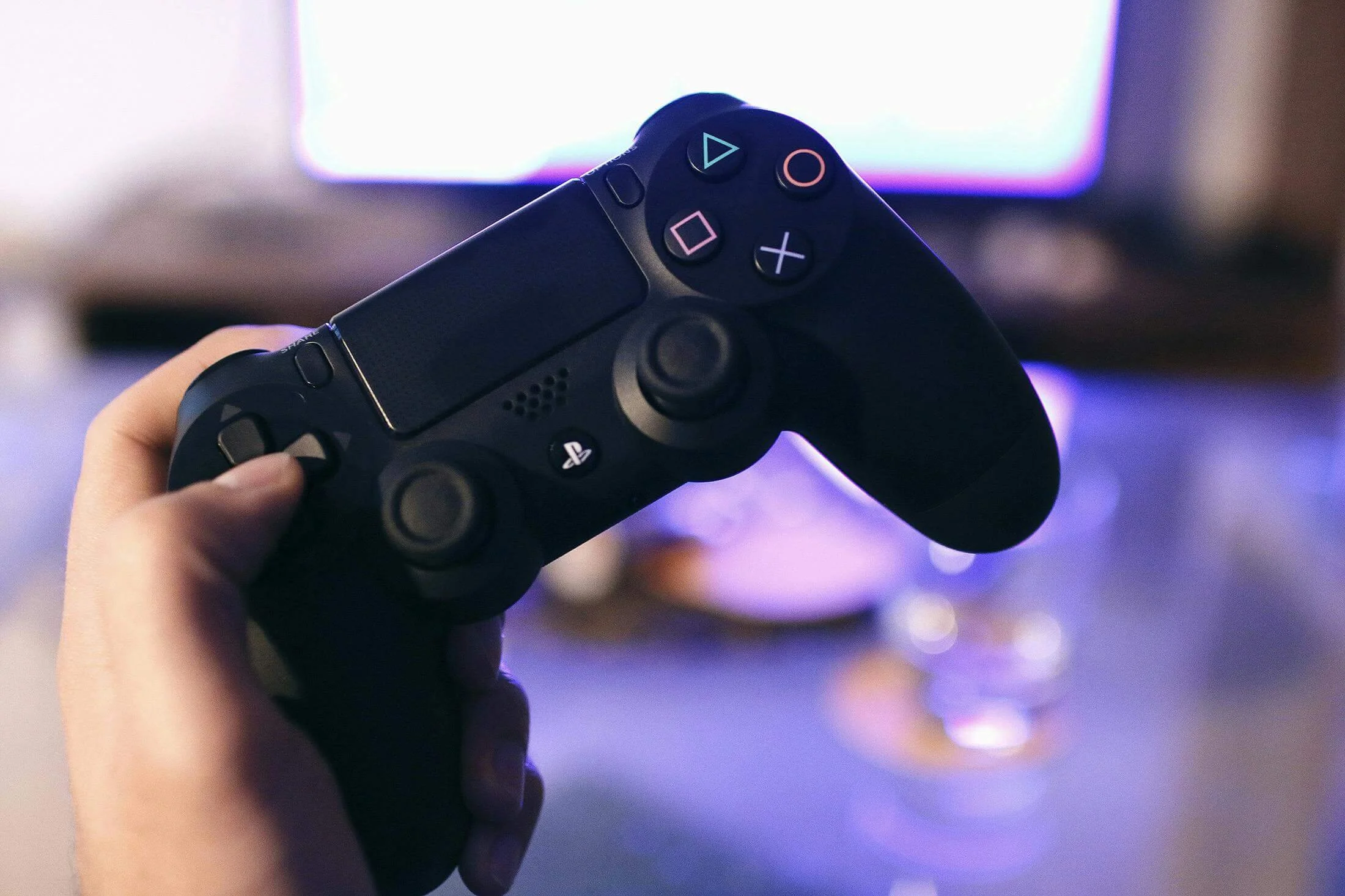
Gaming isn’t always an escape. Often, it’s a language.
Parents, partners, and clinicians tend to interpret hours online as avoidance or addiction, as if the glowing screen alone contains the whole story. But underneath the hyperfocus, beneath the marathon sessions and the all-consuming flow state, something gentler and deeper is happening.
A nervous system searching for regulation.
A mind seeking coherence.
A person seeking connection in a world that’s often too loud, too fast, or too sharp.
If people understood how much gaming offers autistic individuals, structure, predictability, sensory control, low-pressure socializing, half of the so-called “addiction” would make sense in an entirely different light.
And this is doubly true for autistic adults whose offline world has never been designed for the way their nervous system works.
The Nervous System Logs In Before the Player Does
Here is the truth clinicians resist the most:
Autistic nervous systems enter the gaming environment before the person does.
Before the story.
Before the quest.
Before the friends in the Discord call.
The nervous system decides whether the world outside feels safe enough, predictable enough, quiet enough, tolerable enough or whether the virtual world offers something the physical one doesn’t.
Gaming provides:
controlled sensory input
predictable rules
clear social scripts
feedback loops without ambiguity
time to process without judgment
Research on autistic sensory processing (Baranek et al., Robertson & Baron-Cohen) shows heightened sensitivity to unpredictability, noise, and social complexity. Gaming removes those variables.
But because almost no one explains this, loved ones misinterpret physiology as pathology:
“You’re escaping real life.”
“You don’t want friends.”
“You’re addicted.”
“You’re avoiding responsibility.”
All nervous-system states disguised as character flaws.
Why Autistic Individuals May Gravitate Toward Gaming More Intensely
Autistic adults don’t necessarily game “more”; they game differently.
Gaming becomes:
a socially safe portal instead of a crowded room
a way to collaborate without eye contact
a space where identity is customizable and understood
a world where logic and pattern reign instead of chaos
One person feels burnt alive by workplace small talk.
Another finds comfort in a cooperative raid with friends they’ve known for years.
Someone else melts from sensory overload by noon but comes alive in a digital universe where they can control the input.
These individuals aren’t choosing gaming over life.
They’re choosing coherence over overwhelm.
A Micro-Vignette: One Scene That Explains Everything
A man enters his apartment exhausted, the fluorescent lights at work still buzzing.
The moment he sat down and slipped on his headset, his shoulders finally dropped.
A friend said, “Hey man, glad you made it tonight,” and Jordan felt, for the first time all day, understood without performing.
Twenty minutes later, his partner asked why he “checked out again.”
He wasn’t escaping her. He was escaping a world that hadn’t stopped hurting his senses for ten straight hours.
This is how autistic adults get misunderstood between a nervous system seeking refuge and a loved one interpreting distance as rejection.
When Gaming Is Misread as Avoidance or Addiction
This is the misunderstanding point where relationships get tangled.
A partner disappears into a game for hours.
The other feels abandoned.
A parent sees their teen’s intense focus.
They panic, assuming a downward spiral.
But behind the behavior is a nervous system:
overwhelmed
overstimulated
under-supported
and desperate for a regulated environment
Not apathy.
Not defiance.
Not immaturity.
Just biology.
Shutdown, hyperfocus, dissociation, and monotasking are all documented autistic responses to overload. None of them reflect a lack of care.
Regulation Before Restriction
Every autistic gamer eventually learns the same truth on their own:
They don’t game because they reject the world.
They game because their nervous system needs a place to land.
This is not an argument against boundaries.
But boundaries without regulation are useless.
You cannot set healthy limits while flooded.
You cannot engage socially while overstimulated.
You cannot transition out of a game when your system is still mid-cycle.
Polyvagal-informed therapy teaches that connection collapses under threat, and gaming often acts as a bridge back to safety.
Regulation first.
Negotiation second.
The Social Geometry of Online Worlds
Every autistic gamer has a social geometry — a pattern of how they connect in virtual spaces:
One uses text chat because speech is draining.
One prefers structured teamwork in raids.
One thrives in turn-based games where pacing is kind.
One messages friends privately instead of joining group calls.
One feels more authentically themselves behind an avatar.
The point is not to force them offline.
It is to understand the shape of their socializing.
Once you see the geometry, you stop misreading their online presence as avoidance and start recognizing it as an accessibility tool.
Why Autistic Gamers Think They’re Failing (When They’re Not)
“I can socialize in games. Why can’t I do it in real life?”
Because the real world demands:
eye contact
rapid decoding
sensory flexibility
emotional multitasking
unpredictable timing
Gaming demands none of that.
You weren’t failing at socializing.
You were failing at performing neurotypicality.
Once this illusion collapses, self-respect returns.
The Escapist Story vs. the Sensory Story
Most families believe gaming is about escapism. Autistic individuals believe this because they’ve been told it for years.
But gaming often begins in the body long before it becomes a hobby.
A rising heart rate.
A tightening in the chest.
A sensory landscape that feels uninhabitable.
Gaming becomes a haven — regulated input, predictable outcomes, low-threat communication.
The “escape” narrative hides the sensory truth.
When Hyperfocus Takes Over
Every intense gaming cycle reaches a point where the environment becomes secondary.
Deep focus.
Time-blindness.
Muted hunger signals.
Delayed transitions.
Language difficulty.
Low interoception.
These are not signs of addiction.
They are markers of autistic monotropism, the documented tendency to enter deep, immersive focus states.
The body was overwhelmed.
The game restored order.
Everything else faded.
It’s not a character flaw.
It’s a neurotype.
The Story Built After the Session Ends
After hours pass, the mind arrives to judge what the body needed.
“I wasted time again.”
“I’m failing at adulthood.”
“I shouldn’t need games this much.”
“I’m addicted.”
These stories feel true because they match the shame — not the biology.
The behavior was regulatory.
The interpretation became moral.
A Micro-Toolbox for Autistic Gamers and Their Loved Ones
During overwhelm, nothing works except what stabilizes sensory load.
Not lectures.
Not shame.
Not “just stop playing.”
Not timers that trigger panic.
What actually works:
sensory breaks between offline and online worlds
structured transitions
clear agreements made outside moments of overwhelm
combining gaming with self-care rituals
co-regulating with a partner before discussing boundaries
using gaming as a social bridge, not a social replacement
These aren’t hacks.
They’re conditions for well-being.
Why This Matters Clinically
Because gaming is not the enemy.
Dysregulation is.
When clinicians mistake autistic regulation strategies for addiction, they treat the symptom and ignore the cause.
When families misinterpret online engagement as avoidance, they wound a relationship that was never the problem.
Gaming becomes a battleground instead of a refuge.
But once the sensory story is understood, the shame dissolves and the behavior becomes workable instead of pathologized.
Integrating Gaming Into a Real Life
The goal is not to eliminate gaming.
It’s to translate what gaming provides into the offline world:
Predictability → routines
Clear rules → explicit communication
Social safety → chosen relationships
Sensory control → boundaries around overwhelm
Identity freedom → self-defined authenticity
Once this translation begins, gaming becomes one part of life — not the whole of it.
And balance emerges not through force, but through understanding.
FAQ
Is gaming addiction real?
Yes, but it is often overdiagnosed in autistic individuals whose behavior is actually sensory regulation or socializing.
Why do autistic people bond more online?
Because online spaces remove sensory overload, provide processing time, and offer predictable interaction patterns.
Should families set gaming limits?
Only if those limits are co-created at calm times and shaped around sensory needs — not fear.
Is gaming a form of socializing?
For many autistic people, absolutely. It is one of the safest and most successful forms of connection available.
How can partners help?
By supporting regulation, understanding monotropism, and co-creating structure without shame.
Gaming and Autism
Autistic gamers have spent years believing their love for gaming was a flaw.
It was never a flaw.
It was information.
Once we understand what the game provides — structure, safety, coherence, connection the narrative shifts.
Gaming becomes not an escape from life…
but a bridge back into it.
And from that moment on, the path forward becomes kinder, clearer, and far more human.
