OCD Therapist in New Hampshire
New Hampshire sits in a strange spot for OCD therapy: some of the country's best-known OCD programs are an hour or two south, and for most Granite Staters they might as well be on the moon, between waitlists, commutes, and out-of-network rates. Meanwhile, in-state specialists with real OCD training are thin, and thinner the farther north you go. This practice closes that gap by telehealth: two evidence-based OCD treatments, Inference-Based CBT and neurodivergent-affirming ERP, from a New Hampshire-licensed therapist trained specifically in this work, delivered to your living room anywhere in the state.
Help with: contamination & washing · checking · intrusive thoughts · relationship OCD · scrupulosity · perfectionism & "just right" · mental review & Pure O · emetophobia · BFRBs (hair pulling, skin picking) · and OCD in autistic and ADHD adults.
A genuine choice of method
Both I-CBT and affirming ERP are offered here. Different people respond to different approaches, and we'll figure out together in the consult which one suits you best.
Continuity of therapy
One New Hampshire-licensed specialist stays with you throughout, rather than a different face each time you log on.
Affirming from the start
Your autism and ADHD are respected rather than treated as the problem; only doubt-driven rituals are on the plan.
Care for everything around it
OCD rarely arrives alone, so the anxiety and burnout that come with it are handled here too, not sent elsewhere.
OCD therapy across New Hampshire, wherever you are
Join from anywhere in New Hampshire →Not in one of these? That's fine. Telehealth covers all of New Hampshire, from the Seacoast and Lakes Region to the North Country. All that's needed is to be physically in New Hampshire during your session.
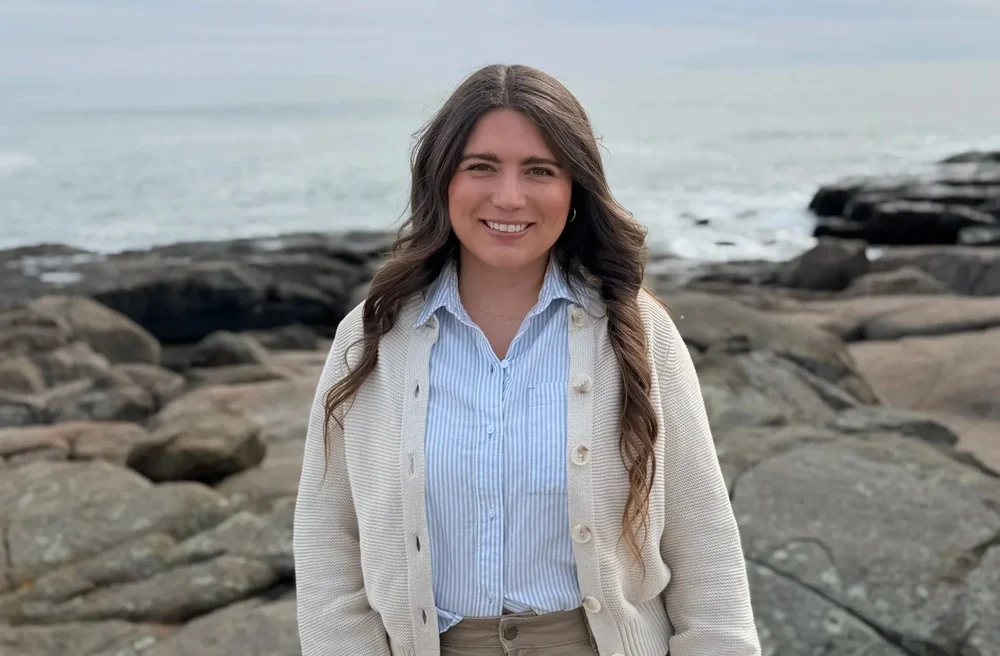
Amiti Grozdon, M.Ed., LCMHC
New Hampshire LCMHC #5711 · OCD telehealth statewide
I'm a Licensed Clinical Mental Health Counselor working with adults across New Hampshire on OCD, anxiety, and phobias by telehealth. My style is direct, warm, and structured, with a clear plan by session three and a standing sense of what we're working toward.
OCD is central to this practice, not an add-on. I hold training in both of the treatments described here, provide them in neurodivergent-affirming form, and stay with your therapy personally instead of routing it to whoever happens to be open.
OCD-specific training: Inference-Based CBT / I-CBT (OCD Training School) · Exposure & Response Prevention for OCD & Anxiety Disorders · Autistic-Affirming ERP (Diverge Counseling) · plus ACT for autism and adult ADHD, DBT skills for neurodivergent clients, and ComB for BFRBs.
Book a free 15-min consultationInsurance or private pay, your choice
The plans below are in-network in New Hampshire. Prefer private pay? Sessions are $200 (50-55 minutes) and check-ins $120 (30 minutes, established clients). The fees & insurance page has every detail.
OCD treatment for the full range of themes
Whatever theme your OCD has chosen, the engine underneath is the same manufactured doubt, and the treatment reaches all of it. The most common themes each have a dedicated page.
The visible themes
Washing and contamination fears, the checking that never quite settles it, ordering and "just right" rituals, and the reassurance loop that resets by morning. Contamination OCD and perfectionism OCD have their own pages, and the main OCD therapy page covers the treatment side as a whole.
The invisible themes
The themes nobody can see: mental reviewing, moral and religious scrupulosity, relationship OCD, existential spirals, and the all-day internal tribunal of "did I do something wrong." These run on doubt, which is exactly why they respond to doubt-focused treatment, with no exposure hierarchy needed for rituals that happen entirely in your head.
The OCD-adjacent fears
Some fears wear a phobia's name tag and run on OCD's engine, and those respond to the same work: emetophobia above all, choking fears that travel with ARFID, the what-if side of panic and agoraphobia, and anticipatory driving anxiety.
OCD in autistic and ADHD adults
For autistic and ADHD adults, the sorting comes first: routines and stims are regulation and stay protected, while doubt-driven rituals get treated, and both methods here are delivered in rebuilt, ND-affirming form. The full picture lives on the OCD for autistic adults page.
OCD themes I treat
Most people come looking for help with one specific theme. These are common ones I treat throughout New Hampshire, each with its own page:
Related anxiety and phobias I also treat
These are anxiety disorders rather than OCD, but they run on the same doubt-and-avoidance engine and respond to the same methods, so they fit naturally alongside this work:
The overlap is common, and access thins fast up north
OCD, autism, and ADHD co-occur far more often than routine therapy assumes, and in New Hampshire the specialists cluster in the south while need runs statewide. The figures make the point.
Sources: CDC ADDM Network (autism identification by state); Dietz et al. (2020) adult ASD prevalence; Hollocks et al. (2019) lifetime OCD in autistic adults; co-occurrence meta-analyses. State figures reflect identification rates, which track access to evaluation as much as true prevalence. New Hampshire's OCD specialists concentrate in the southern tier, leaving the Lakes Region, Upper Valley, and North Country underserved, which is exactly the gap telehealth closes.
Two doors into the same recovery
The usual OCD menu has one item: exposure, take it or leave it. Here there are two genuinely different doors, and having both changes what walking through either one means.
I-CBT: no deliberate exposure
I-CBT starts from a different diagnosis of the problem: the obsession is a doubt your imagination manufactured against the testimony of your own senses, and a manufactured doubt can be unmade. The work dismantles the reasoning that sells the doubt, with no flooding and no provoked anxiety, and randomized trials have found it comparable to established treatments, strongest exactly where conviction runs high. Read the full I-CBT introduction →
Want them side by side? Read I-CBT vs ERP, then we'll decide which fits you in your free consult.
Affirming ERP: exposure you choose
When years of avoidance have shrunk the map, well-built exposure work takes the territory back, and "well-built" is load-bearing: consent is structural here, the hierarchy is yours, the veto is real, sensory pain is never treated as anxiety to habituate, and nothing is ever sprung on you. Read the affirming ERP introduction →
Not sure if this is OCD, or which treatment fits?
That's exactly what the free consultation is for. We'll talk it through by phone, no pressure and no commitment, and you'll leave with a clearer sense of your options in New Hampshire.
Book a free 15-min consultationClose to Boston's specialists, far from actual access
New Hampshire's OCD problem is proximity without access. The famous OCD programs of greater Boston are close enough to tantalize and, for most people, functionally out of reach: months-long waitlists, commutes that eat a workday, and rates that assume a different budget. In-state, clinicians with genuine OCD specialty training cluster in a few southern towns, ERP training is rarer, and I-CBT, newer to the U.S., is rarer still; north of the notches, the honest local option has often been generic talk therapy, which OCD politely ignores.
Telehealth dissolves all of it at once: no waitlist for a Boston program, no drive down 93, and for OCD specifically, a clinical advantage, because your actual triggers, your actual kitchen, and your actual front-door lock are in the session with you rather than described from memory. Notch weather and North Country distances stop having a vote in whether treatment happens. That's true whether you're in Manchester or Nashua, Concord, Derry, Salem, Rochester, Dover, Portsmouth and the Seacoast, Keene and the Monadnock Region, Hanover and the Upper Valley, Laconia and the Lakes Region, Conway, Littleton, or Berlin and the North Country: same specialist, same treatments, same depth of work, anywhere in New Hampshire.
The New Hampshire practice page covers everything else I treat statewide.
Consult & sort
The free call first, then a real assessment: themes mapped, mimics ruled out, regulation separated from ritual.
Choose the door
Read both introductions, then choose with me: I-CBT, affirming ERP, or one after the other.
The work
Weekly structured sessions from wherever you are in the state, working the plan at a pace that holds.
Make it hold
Progress measured in your actual week, plus a standing plan for the day OCD auditions a new theme.
All sessions online via secure, HIPAA-compliant video, Monday through Friday, 8am to 6pm Eastern. You must be physically located in New Hampshire at the time of session; any private space works, home, office, or parked car.
Insurance (In-network across New Hampshire with)
Private pay
Benefits differ by plan, so confirm yours before starting. Everything is on the services page.
Amiti Grozdon, M.Ed., LCMHC (New Hampshire LCMHC #5711), trained in I-CBT (OCD Training School) and autistic-affirming ERP, treating OCD, anxiety, and phobias by telehealth across New Hampshire. Meet your therapist →
Boston's waitlists aren't the only option. Neither is white-knuckling it.
If you're searching for an OCD therapist in New Hampshire, this is the work I do: specialty OCD treatment with I-CBT and affirming ERP, New Hampshire-licensed, by telehealth from anywhere in the state, Seacoast to North Country. The New Hampshire practice page covers everything else I treat.
The consultation is free and short. We'll talk by phone (I'll call you at the time you schedule) and see if we're a fit. No pressure, no commitment.